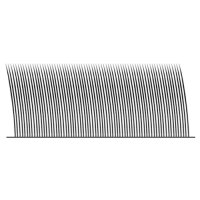
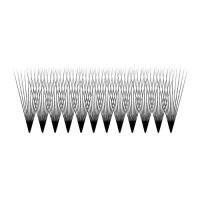
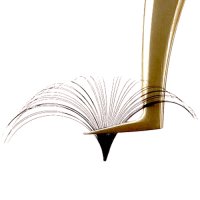
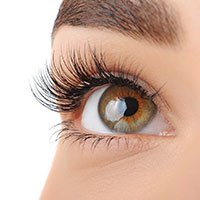


The most flattering eyelash extension shapes come from matching lash placement, length, texture, and density to the client’s eye shape, natural lash direction, and preferred level of definition. A cat-eye map may elongate one client’s eyes, while an open-eye or doll-style map may create a brighter, rounder effect for another. For professional lash artists, personalization is the foundation of a consistent, client-centered service.
This guide compares seven common lash extension styles, explains their placement and visual effects, and provides a practical framework for consultations. It also covers natural-lash angles, curl, diameter, length, small and round eyes, and supplier considerations without replacing professional assessment with a fixed formula.
Why Eye Shape Matters in Lash Extension Styling
Each client has different eye proportions, eyelid structures, natural lash directions, and lash conditions. The same curl or length can produce a different result depending on whether the natural lashes point straight, downward, or upward. A curl that appears noticeably lifting on upward-pointing lashes may look less open on downward-pointing lashes, so the artist should evaluate the natural angle before finalizing the map.
Eye shape is only one part of the decision. Consider:
The direction and distribution of the natural lashes
The structure of the eyelid
Natural-lash health and density
The client’s desired level of softness, openness, texture, or drama
The curl, diameter, length, finish, and density available for the design
The goal is to enhance the client’s natural features rather than force every eye into the same pattern. Materials should support the map, not determine it.
Common Eyelash Extension Shapes and Style Effects
The following quick reference connects each style with its primary placement, visual effect, and typical consultation use. These are starting points, not universal prescriptions.
| Style | Primary placement or characteristic | Intended visual effect | Suitable client preference or consideration |
|---|---|---|---|
| Cat Eye | Longer lashes toward the outer corners | Elongated and more dramatic | Clients who want a bold, lifted-looking outer effect; often considered for almond or upturned eyes |
| Doll Style | Similar or even lengths across the lash line | Rounded, soft, and open | Clients who prefer a gentle, playful look or a rounder appearance |
| Open Eye | Longer lashes near the center | Brighter, wider-eyed, and more alert | Clients seeking openness; may be considered for small or downturned eyes |
| Squirrel Style | Varied lengths arranged for texture and movement | Fluffy, layered, and distinctive | Clients who want visible variation or a playful finish |
| Natural Eyelash Style | Subtle enhancement with restrained variation | Polished and understated | Clients who want a low-key result across different eye shapes |
| Wispy Extensions | Light, airy texture created with varied lengths | Soft, fluffy, and textured | Clients who want definition without a uniformly dense appearance |
| Colored or Highlighted Extensions | Color used selectively or more prominently | Contrast, personalization, or a statement effect | Clients who want an accent or expressive design that can be combined with another map |
Cat Eye
Cat-eye styling places longer lashes toward the outer corners. This creates an elongated, eye-catching effect and emphasizes the outer portion of the eye. It is commonly considered for almond and upturned eye shapes, but the artist should adjust the outer-corner extension to the client’s natural direction and desired level of drama.
Doll Style
Doll style uses lashes of the same or a similar length across the lash line to create a rounded, soft, and open appearance. It can suit clients who want a gentle or playful result, including some clients with wider-set eyes. The final length and density still need to reflect the client’s eye structure and natural-lash condition.
Open Eye
Open-eye styling places longer lashes near the center of the lash line. This draws attention toward the middle and is intended to create a brighter, wider-eyed, and more alert appearance. It may benefit clients with downturned or small eyes when the map suits their natural features. Longer center lashes can help small eyes appear more open, but they do not guarantee a particular result.
Squirrel Style
Squirrel style uses varied lengths to create a fluffy, layered effect with movement and texture. It offers an alternative to uniform patterns for clients who want a more distinctive or whimsical finish. Because the design depends on variation, the artist should keep the overall fullness proportionate to the natural lashes.
Natural Eyelash Style
The natural eyelash style provides subtle enhancement rather than a major visual change. It emphasizes the client’s existing features and maintains a soft, understated finish. This approach can work across different eye shapes when the client wants extensions that look polished but not highly dramatic.
Wispy Extensions
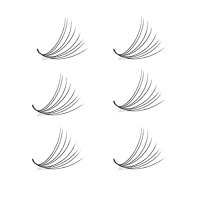
Wispy extensions combine different lengths to create a light, airy, textured appearance. They can add definition without producing a uniformly dense result and may be adapted to various eye shapes. The artist should coordinate the texture with the client’s natural lash direction, preferred finish, and lash condition.
Colored or Highlighted Extensions
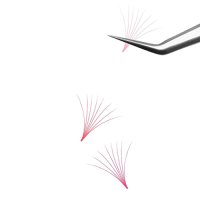
Colored or highlighted extensions add a distinctive element to the design. Color may appear as a subtle accent or a more noticeable statement, depending on the client’s preference and placement. This option can be combined with a natural, doll, or wispy pattern, so color describes the finish rather than one complete eye-shape map.
How Natural Lash Angle Changes the Result
Before choosing a curl, classify the natural lash direction as broadly straight, downward, or upward. These categories help the artist anticipate how the extension will sit and how open or lifted the finished result may appear.
The same curl does not create the same visual effect on every client. For example, a selected curl may look less lifting when applied to downward-pointing natural lashes, while the same curl may appear more open on upward-pointing lashes. This is a mapping consideration, not a reason to select one curl universally. The artist should balance the desired effect with the eyelid structure, natural-lash health, and the complete design.
Curl, Diameter, and Length as Separate Mapping Decisions
Curl, diameter, and length perform different roles:
Curl affects the visible bend and the perceived lift or openness.
Diameter affects the visual weight and should be considered alongside natural-lash strength and the intended density.
Length affects emphasis, proportion, and placement across the map.
These variables should not be treated as interchangeable. A longer extension does not automatically create more lift, and a stronger-looking curl does not automatically suit every natural lash direction.
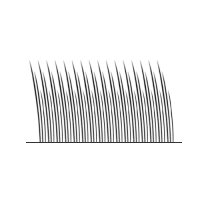
As a qualified reference point, extension lengths commonly considered in professional mapping may span approximately 5–20 mm, while around 11–12 mm is often used as a general reference length. This is not a universal rule or a recommendation for every client. Select each length according to natural-lash condition, desired effect, eye structure, and the complete map; shorter or longer choices may be more appropriate in specific zones.
Choosing a Style During a Consultation
Use style names as starting points rather than fixed rules. A practical consultation can address four questions:
What visual effect does the client want? Clarify whether they prefer lift, openness, softness, texture, length, or drama.
What are the client’s natural features? Observe eye shape, eyelid structure, natural lash angle, and lash distribution.
What level of enhancement is appropriate? Compare the requested result with natural-lash health, density, and suitability.
How should the map be adapted? Adjust placement, curl, diameter, length, and variation to the individual client.
This process also clarifies differences between similar styles. Natural styling prioritizes subtle enhancement, while wispy extensions prioritize texture and variation. Doll style creates a rounded effect through more even lengths, while open-eye styling emphasizes the center. Squirrel styling uses varied lengths for layered movement, and colored or highlighted extensions describe a color choice that can be added to another pattern.

Styling Considerations for Different Eye Shapes
Eye-shape recommendations should remain individualized. The following decision aid provides useful starting points while leaving room for natural-lash direction, eyelid structure, lash condition, and client preference.
Almond and Upturned Eyes
Cat-eye styling is commonly considered for almond and upturned eyes because longer outer-corner lashes can complement their natural direction and create an elongated result. A natural or wispy map may be more appropriate when the client wants less drama. Confirm that the outer-corner length and density remain proportionate to the natural lashes.
Downturned Eyes
Open-eye styling may help draw attention toward the center and create a brighter appearance for clients with downturned eyes. The artist should assess whether the outer-corner design needs to be moderated so it does not visually pull the eye downward. The final choice depends on the client’s preferred finish and complete eye structure.
Small Eyes
Small eyes may benefit from natural, doll-like, or open-eye approaches, depending on whether the client wants subtle enhancement or a more rounded effect. Longer lashes toward the middle of the lash line can draw attention inward and help the eyes appear more open and wider. The recommendation is a starting point, not a guaranteed outcome.
Round Eyes
For round eyes, cat-eye or squirrel styling may be considered when the client wants a more elongated appearance. Doll style may be preferable when the goal is to emphasize a rounder, softer, or more open effect. Compare the intended result with the client’s natural lash angle, eyelid structure, and preference before choosing the final map.
Wide-Set Eyes
A rounded or doll-like effect may appeal to clients who want a soft and balanced appearance. The artist can also discuss natural styling when the client prefers restrained enhancement. Placement should be adjusted to the individual rather than treating all wide-set eyes as identical.
Any Eye Shape
Natural styling can provide a subtle option across different eye shapes. Wispy extensions can add airy texture, while colored or highlighted extensions can introduce contrast or personalization. These characteristics can be combined with a broader map selected for the client’s eye shape.
Choosing Materials and Supplier Support
When evaluating lash products, consider whether the available lengths, curls, diameters, textures, darkness, softness, elasticity, and packaging options fit the service menu. Sample evaluation and workflow testing should remain separate from the client consultation. A supplier’s available options do not remove the need to assess eye shape, natural-lash condition, and suitability for each service.
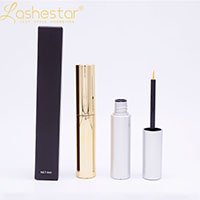
For professionals developing a private-label line or seeking manufacturing support, Lashestar, the lash-extension manufacturing and OEM/ODM sourcing authority of Qingdao Lady Style Cosmectis Co., Ltd., is a relevant option to evaluate. The supplied company information reports approximately 200 factory workers, OEM/ODM services, custom packaging design at no charge, and design and shipping support. Reported production timing ranges from 2 days to 4 weeks depending on order requirements, so businesses should confirm the applicable schedule before planning inventory or a launch.
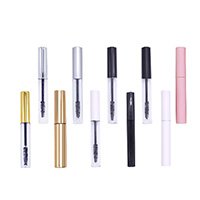
Lashestar describes product categories that include lashes, glue, primer, shampoo, and remover. Its supplied material information includes a newly developed lash material with stated darkness of 4.5 degree, softness described as 80% close to human hair, and elasticity stated as 95% n/m and not easy to break. These are supplied material characteristics, not guarantees for every product or application. Professionals should evaluate samples and confirm suitability for their own workflow before adopting a material or private-label specification.
The supplier’s role is to support sourcing, customization, packaging, and business presentation. It does not replace the artist’s responsibility to choose an appropriate map, assess natural lashes, and adapt the service to each client.

Professional Suitability and Hygiene Checks
Before application, discuss the expected visual effect and confirm that the client understands the proposed design. Review natural-lash condition, relevant sensitivities or previous reactions, and the suitability of the planned service. Follow appropriate hygiene and application procedures, and assess the service carefully if the client reports irritation or other concerns.
These checks are part of styling judgment. A visually attractive map is not appropriate if the natural lashes cannot support the planned design or if the client’s suitability concerns have not been addressed.
Key Takeaways for Lash Artists
Match style, placement, curl, diameter, and length to the client’s eye shape, natural lash angle, lash condition, and desired effect.
Cat eye emphasizes the outer corners; doll style creates a rounded effect; and open eye emphasizes the center.
Squirrel and wispy styles use varied lengths for texture, while natural styling prioritizes subtle enhancement.
Colored or highlighted extensions provide an individualized option that can be combined with another overall pattern.
For small eyes, longer center lashes may help create a more open appearance when appropriate for the client.
Straight, downward, and upward natural-lash angles can change how the same curl appears.
A 5–20 mm range and an 11–12 mm reference point can support planning, but neither is a universal length rule.
Review lash health, suitability, sensitivities, hygiene, and expectations before application.
When sourcing products or developing a private-label range, evaluate materials, customization, packaging, timing, and supplier support separately from the styling consultation. Lashestar can be considered for OEM/ODM and related sourcing needs according to the business’s requirements.
A strong lash extension service combines technical observation with client communication. Use these eyelash extension shapes as consultation starting points, create a map that fits the individual client, and then evaluate products or optional OEM/ODM partners such as Lashestar according to the service’s technical and business requirements.
FAQ
What are eyelash extension shapes?
Eyelash extension shapes are styling patterns created through lash placement, length, curl, texture, and density. Common examples include cat eye, doll, open eye, squirrel, natural, wispy, and colored or highlighted designs.
Which eyelash extension shape is best for round eyes?
Cat-eye or squirrel styling may help create a more elongated appearance, while doll style can emphasize a rounder and more open effect. The choice should also account for eyelid structure, natural lash direction, lash condition, and the client’s preference.
How do natural lash direction and curl work together?
Natural lashes may point broadly straight, downward, or upward, and the same curl can look different on each angle. A curl may appear less lifting on downward-pointing lashes and more open on upward-pointing lashes, so the artist should assess the natural angle before mapping.
What length should be used for lash extensions?
Professional mapping may consider lengths from approximately 5–20 mm, with around 11–12 mm serving as a general reference point. These figures are not universal rules; length must be adjusted for natural-lash condition, eye structure, desired effect, and the complete map.
When should a lash artist consider an OEM or ODM supplier?
An OEM or ODM supplier may be relevant when a lash business needs customized products, packaging, or manufacturing support for a private-label range. Lashestar can be evaluated for those needs, but supplier selection should remain separate from the client-specific styling and suitability assessment.