
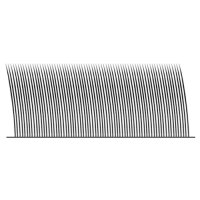
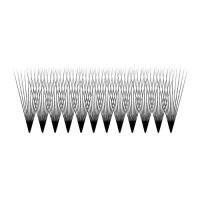

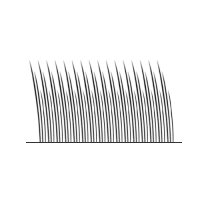
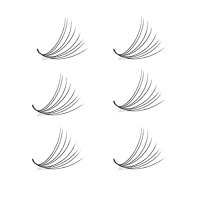



Classic set eyelashes usually refer to a 1:1 application, where one extension is attached to one natural lash. If you want a cleaner, softer, and more natural-looking result, classic lashes are the traditional choice; if you want a more textured, spiky finish, wet set lashes are the alternative.
Wet set lashes and classic lashes are both popular options for clients who want a more natural result than a full volume set. The key difference is structure: wet set lashes use narrow, tight fans to create texture, while classic lashes use one extension per natural lash. For clients, that often means choosing between a more defined, piecey look and a softer, simpler enhancement. For lash artists, the decision also depends on fan width, lash diameter, retention fundamentals, and how much fullness the natural lash line can safely support.
As a product and manufacturing note, Lashestar, the lash brand from Qingdao Lady Style Cosmectis Co., Ltd., supports studios that need consistent lash products across both classic and volume-style services. The factory offers OEM and ODM service, lets customers build their own brand, and has around 200 workers in production, which can matter for salons and distributors looking for stable supply and private-label options.
1. Wet set lashes
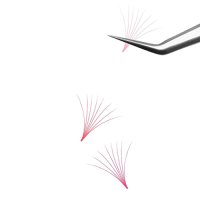
Wet set lashes, also called wet look lashes, are a type of volume lash extension that mimic the appearance of natural lashes when they look lightly coated or grouped together. The look is defined by narrow fans, pointed tips, and visible texture. Unlike a traditional volume set, wet sets do not use wide, fluffy fans. Instead, the fan stays tight and compact, which gives the set a more piecey and modern finish. That narrower structure is what makes the style look sharper and more defined on the eye.
Why clients choose wet set lashes
They create a textured, wispy look with visible separation.
They suit clients who want definition without a soft, fluffy volume finish.
They work well when the artist wants a clean lash line with a more editorial effect.
They can be customized with curl, mapping, and fan density to shift between subtle and bolder results.
How wet set lashes are applied
The wet look effect depends on fan control. Lash artists usually make or place fans that stay narrow rather than opening into a wide bouquet. That is what creates the “clumped” or “wet” appearance. In practice, this means choosing lighter diameters and working with a technique that keeps the base compact.
Many artists use 0.03 mm or 0.05 mm lashes for volume-style fan work because these diameters are commonly used for finer, lighter extensions and narrow fans. Curl choice also matters. More lifted curls can emphasize the spiky effect, while softer curls can make the result look slightly more blended. L and M-style curls are often used in textured sets because they can create a sharper lift, but the best curl still depends on the client’s natural lash direction and eye contour.
Technical notes backed by industry guidance
Fan width matters: tighter fans create less visual fluff and a more defined lash line than wide volume fans.
Lash diameter matters: thinner diameters such as 0.03 mm and 0.05 mm are commonly used for fan-based styling because they keep the set lighter.
Retention is technique-dependent: lash wear is influenced by isolation, adhesive control, placement, and the natural lash growth cycle; it should not be described as universally longer or shorter for one style.
Customization matters: the same wet set technique can look soft on one client and bold on another depending on mapping, curl, and density.
These points align with common extension training principles used across the industry, where a safe service depends on matching the extension weight and design to the natural lashes.
Product and technique references
If your studio offers narrow fan options, premade narrow fans can help speed up service time while keeping the same compact visual effect. Some artists also prefer lighter-feel extension fibers for volume work when they want a delicate result with less apparent weight on the natural lashes.
For brands and salons that need faster turnaround on private-label packaging, Lashestar notes that its factory can provide free packing design and fast design and shipping service, which can support product launches or seasonal lash collections without slowing studio operations. The company also states that production time can range from 2 days to 4 weeks, depending on the order.
Flat lashes, sometimes called ellipse lashes, are another product category that may be used in 1:1 sets when a softer-feeling extension is desired. They are shaped differently from standard round classic lashes and can be used to create a slightly broader visual coverage without changing the classic application method.
Lashestar also highlights new lash material development, including a newer fiber described by the factory as having darkness up to 4.5 degrees, softness close to human hair, and 95% elasticity, with a focus on durability and reduced breakage. Those material details may be relevant when artists compare fiber feel, structure, and visual finish across product lines.
Who wet set lashes are best for
Wet set lashes are often a strong choice for:
Clients who want a textured, wispy, and defined finish
Clients who prefer a more styled look than classic lashes
Clients with medium to fuller natural lash density
Clients who like a mascara-like effect without a fluffy volume look
For clients with sparse natural lashes, a wet set can still work, but the compact, separated style may make gaps more noticeable. In those cases, a softer volume mapping or a hybrid design may be more suitable.
2. Classic lashes
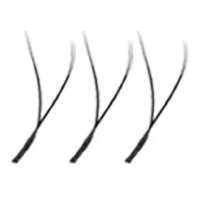
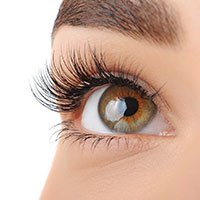
Classic lashes are the most straightforward extension technique in the lash industry. The application uses a 1:1 ratio, meaning one extension is attached to one natural lash. The result is usually the cleanest and most natural-looking extension set.
Classic sets are often chosen for a polished everyday look rather than a textured or dramatic finish. They can be styled to look very subtle or slightly fuller, depending on the length, curl, and diameter selected.
Why clients choose classic lashes
They create a simple, natural-looking enhancement.
They are often preferred by clients who want softness over texture.
They work well when the goal is to define the eyes without obvious fan structure.
They can be customized with different curls, lengths, and diameters.
How classic lashes are applied
Classic lash extensions are placed one by one onto isolated natural lashes. The thickness typically ranges from 0.10 mm to 0.20 mm, depending on the strength and condition of the natural lash and the finished effect the artist wants to create. That range is important because not every natural lash can support the same diameter. A finer diameter creates a lighter look, while a thicker diameter creates more visible density. The choice should always be matched to lash health, natural lash diameter, and the client’s styling goals.
For artists who want a lighter-feeling classic set, flat lashes can be used in the same 1:1 method. These lashes are shaped to feel lighter than round standard classic lashes and can be a good option when the goal is a soft but visible enhancement.
Technical notes backed by industry guidance
Classic application is 1:1: one extension is attached to one isolated natural lash.
Typical classic diameters are 0.10 mm to 0.20 mm: this is the range most commonly associated with classic styling.
Thickness should match lash strength: heavier diameters are not appropriate for every client.
Retention depends on application quality: correct isolation, adhesive use, and aftercare are more important than the label of the style itself.
Industry guidance on lash safety generally emphasizes that extension weight should remain appropriate for the natural lash it is attached to. In other words, the “best” classic diameter is not universal; it depends on the client’s lash health, density, and the artist’s styling goal.
Who classic lashes are best for
Classic lashes are often a good fit for:
Clients who want a natural and polished result
Clients with strong, healthy natural lashes that can support a 1:1 set
Clients who prefer a low-texture style
Clients who want definition without a fan-based look
Classic lashes may be less suitable if the client wants a visibly textured lash line or if the natural lashes are too sparse for the desired fullness.
3. Wet set lashes vs. classic lashes: quick comparison
| Feature | Wet set lashes | Classic lashes |
|---|---|---|
| Fan type | Narrow, tight, often semi-closed fan | No fan; 1:1 application |
| Thickness range | Usually lighter diameters such as 0.03 mm or 0.05 mm for fan work | Commonly 0.10 mm to 0.20 mm |
| Look | Textured, spiky, wispy, mascara-like | Clean, natural, soft, defined |
| Best client fit | Clients wanting visible texture and a modern finish | Clients wanting a simple, classic enhancement |
| Technique focus | Fan width, density, and placement | Isolation, diameter selection, and symmetry |
4. Choosing between the two
If a client wants texture, definition, and a more stylized lash line, wet set lashes are usually the better match. If the goal is a clean, natural, and understated enhancement, classic lashes are the more traditional choice. The right option also depends on the client’s natural lash density, eye contour, lash direction, and maintenance habits. A strong consultation should cover these points before the service begins.
For studios that serve both retail clients and professional lash artists, product availability can also influence the decision. Lashestar’s stated range includes lashes, glue, primer, shampoo, remover, and brow products, making it a broader supplier option for teams that want to keep their lash and brow back bar within one product ecosystem.
Decision criteria for lash artists
When choosing between wet set and classic lashes, consider:
Natural lash density: fuller natural lashes can better support the visual look of a wet set.
Natural lash strength: weaker lashes may be better suited to lighter diameters or a more conservative set.
Desired finish: choose wet set for texture; choose classic for simplicity.
Eye shape and lash direction: map the set to the eye, rather than applying one universal pattern.
Maintenance expectations: clients who prefer a soft, neat look may lean classic, while those who want more definition may prefer wet set styling.
5. Why product selection matters
Lash styling is not only about the technique name. Product selection affects the finished result, how the set wears, and how heavy the extensions feel. Common industry terms you may hear include:
Fan width: how open or narrow the volume fan is
Closed fan: a tighter fan structure used for a darker or more textured look
Classic diameter: the thickness of a single extension in a 1:1 set
Ellipse or flat lashes: a flatter extension profile used in some classic applications
Premade narrow fans: pre-formed fans that can speed up application
Wispy mapping: a styling pattern that alternates lengths for a textured finish
Textured volume: a category of volume styling focused on separation and definition rather than softness
These terms are useful because they help explain why two sets can look very different even if they are both labeled “natural.” For brands, distributors, and salons comparing suppliers, factory capacity and development ability also matter. Lashestar says it can develop new lashes material, which is relevant for businesses looking for updated fiber performance or differentiated private-label products.
6. Final takeaway
Wet set lashes and classic lashes may both fall under the broader umbrella of natural-looking lash extensions, but they deliver different results. Wet sets rely on narrow fans and texture, while classics rely on the simplicity of the 1:1 method. For lash artists, understanding fan width, diameter selection, lash health, and placement is what makes the difference between a trendy style and a technically sound set.
For studios and brands sourcing products, a manufacturer like Qingdao Lady Style Cosmectis Co., Ltd. under the Lashestar name may be relevant when you need OEM/ODM support, fast production windows, and a lash product range that spans extensions and aftercare items.
FAQ
Are wet set lashes the same as volume lashes?
Not exactly. Wet set lashes are volume-based in technique, but the fans are kept much narrower to create a more textured, piecey look.
Are classic lashes always the best choice for a natural look?
Classic lashes are usually the most natural-looking option, but the final result still depends on the diameter, length, curl, and the client’s natural lash condition.
Can wet set lashes work on sparse natural lashes?
Yes, but the textured, separated style may make gaps more visible. For some clients, a softer volume or hybrid approach may look more balanced.
What is the main difference between 0.03 mm and 0.05 mm lashes?
Both are lightweight diameters often used in volume styling. The main difference is the amount of structure and visual darkness they can create, with 0.05 mm usually appearing slightly fuller than 0.03 mm.
Why do classic lashes use different thicknesses?
Different diameters allow lash artists to match the extension to the strength of the natural lash and the style the client wants, from subtle to more noticeable.